
Currency

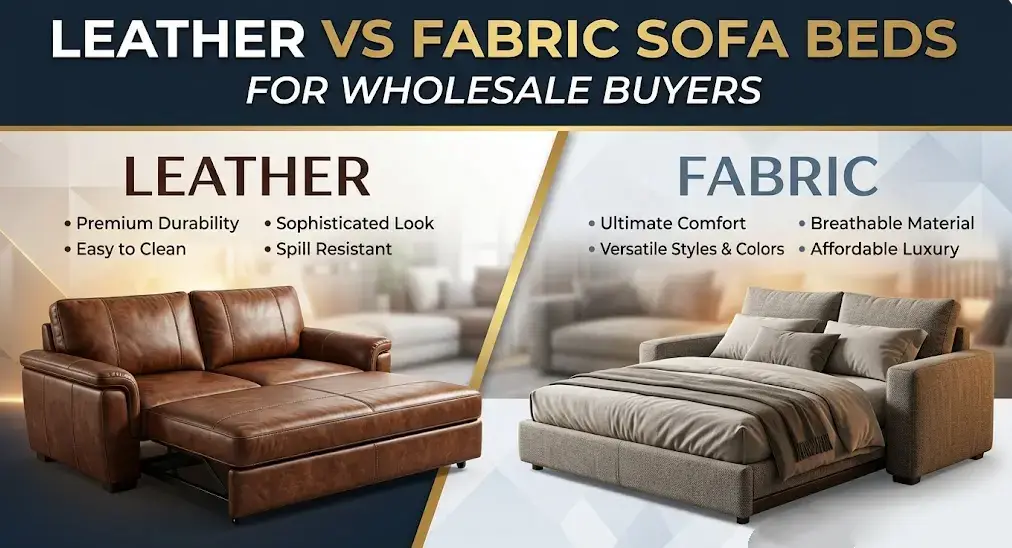
How wholesale buyers approach the leather vs. fabric decision. Most of them focus on the materials themselves, when they really should be thinking about the business strategy behind that choice.
Let me share what we've actually learned from working with hundreds of wholesale partners and managing our OEM/ODM production lines at Leizi.
Here's what I see happening repeatedly: a wholesale buyer walks into a factory, sees a gorgeous leather sofa bed, falls in love with it, and immediately thinks "high price = high profit." Then they order 100 units, and six months later they're still sitting on 40 of them.
The real story isn't that leather is bad. It's that they made a business decision without understanding their actual market.
I remember a specific case from 2015. We were pushing hard on leather sofa beds, genuinely believing they were the premium answer. One of our best clients at the time took our advice seriously and loaded up on inventory. But then something unexpected happened—his customers kept asking for fabric options. They weren't looking for luxury. They were looking for functionality and easy maintenance.
That year forced us to honestly reconsider our entire approach. We expanded our OEM/ODM fabric sofa bed production lines, and honestly, it transformed our business. Sales doubled. But more importantly, our clients' sales doubled too.
The lesson? You need to understand your specific customer base first, then let that guide your wholesale sofa bed supplier choice.
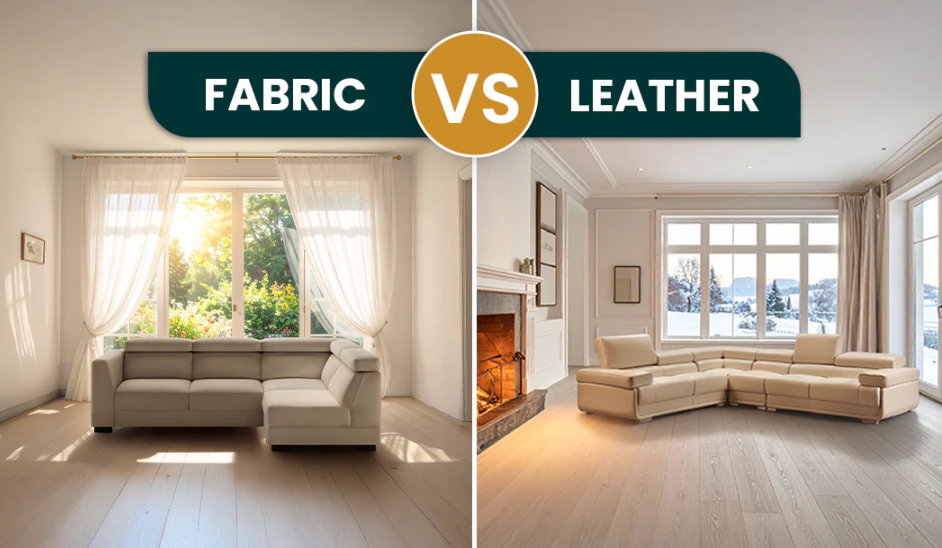
The Real Cost Equation
When we talk to wholesale buyers about cost, most of them look at the per-unit price. A leather sofa bed might cost $800, fabric at $500. Looks like an easy math problem.
Except it's not.
One of our longtime clients did the actual accounting last year. He bought 50 leather units and 50 fabric units at the same time. Here's what happened: the leather inventory tied up $40,000 in working capital, while the fabric inventory needed only $25,000. That extra $15,000? It could have purchased 30 additional fabric units with better per-unit economics.
But it gets more interesting.
The leather units took 4-6 months to sell through. The fabric units moved in 2-3 months. So while the leather inventory was sitting there, he was paying storage costs, dealing with potential color fading in showrooms, and managing the risk of market trends shifting. We actually saw one client's "premium leather" collection become outdated while still in inventory—suddenly customers wanted modern designs, and those heavy traditional leather pieces looked dated.
The Hidden Lease Time Problem
This is where things get really interesting, and honestly, most wholesale buyers don't think about it carefully enough.
Leather sofa beds require longer lead times on the raw materials side. We need 6-8 weeks to source quality leather, ensure consistent tanning, and manage the supply chain. Fabric? We can typically work within 3-4 weeks because our fabric suppliers have established relationships and larger inventory buffers.
I had a client who got hit with a sudden rush order—100 units needed in 6 weeks. If they'd specified leather, we couldn't have made it happen. The fabric sofa beds? We handled it, even with some overtime. That single order was transformative for that client's business because they could actually fulfill customer demand.
This is why fabric sofa beds for wholesale buyers often provide more flexibility. You're not locked into long production cycles.
Working directly with a wholesale sofa bed supplier means you should understand how they operate. At Leizi, we manage both leather and fabric production, and they're genuinely different animals.
Quality Consistency Matters More Than You Think
Leather is natural material. That means inherent variability. Color variations, thickness inconsistencies, and occasional surface marks are just part of the material. Our quality control team has to be meticulous about sorting and grading leather—and that cost gets built into pricing.
Fabric, especially technical fabrics we use for bulk sofa bed orders, offers much better consistency. The manufacturing process is more controlled. We can promise consistent color lots, consistent durability ratings, and predictable performance. For wholesale buyers managing multiple retail locations or resellers, this consistency is worth money because customers won't call complaining about variations.
Leather's Beauty Comes With a Fragility Tax
Here's something they don't always tell you: leather requires ongoing care. That's not just an end-consumer problem—that affects returns and complaints.
Our return and complaint rate data (and we track this obsessively):
Why the difference? Leather damage can seem permanent to consumers. A stain, a crack, a color mark—it feels catastrophic. Fabric stains can often be cleaned, and if the cover is removable, you can replace it entirely. Plus, consumers often damage leather through ignorance of proper care, then blame the manufacturer.
One of our leather clients was getting complaints about color fading. It turned out his customers were using the wrong cleaning products and exposing the sofa to direct sunlight. Real problem? No. Perception problem? Absolutely. He was spending 2-3 hours per complaint just explaining leather care to frustrated customers.
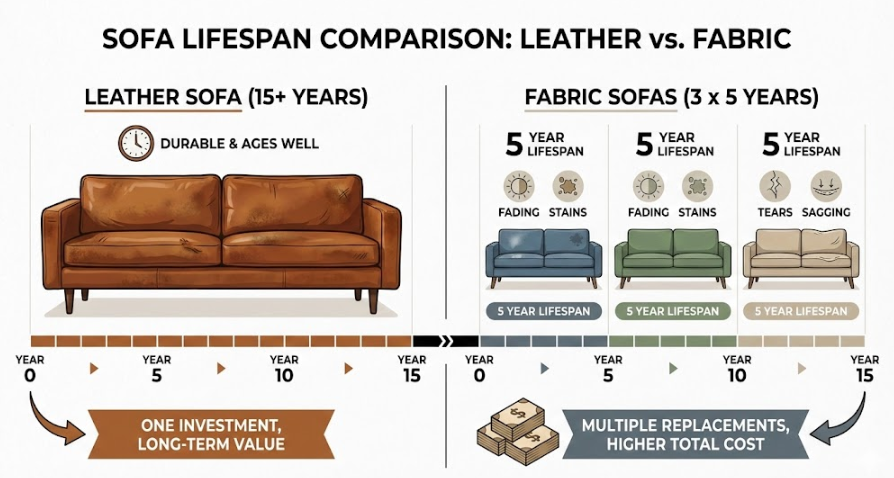
Your Actual Service Costs
Let me break down what we've learned from managing warranty claims across our wholesale network:
Leather sofa beds require:
Fabric sofa beds need:
The economic reality: for every 100 leather units sold, we're seeing about 4-5 warranty service requests. For fabric units, it's maybe 1-2 requests.
Multiply that across a wholesale operation handling 500+ units per year, and suddenly your fabric sofa bed wholesale strategy looks a lot more profitable.
| Factor | Leather Sofa Bed | Fabric Sofa Bed |
| Initial wholesale cost | $750-1,200 | $450-750 |
| Inventory turnover time | 4-6 months | 2-3 months |
| Warranty claim rate | 4-5% | 1-2% |
| Avg service cost per claim | $80-150 | $15-30 |
| Customer complaint rate | 7-8% | 2-3% |
| Cover replacement cost | N/A | $80-120 (optional) |
| Annual carrying cost (per unit) | $25-40 | $10-15 |
I don't want to sound like I'm anti-leather. That wouldn't be honest, and honesty matters if you're going to work with a real partner wholesale sofa bed supplier.
Leather works when:
Your market is genuinely high-end. Not "aspires to be high-end," but actually high-end. We have clients in upscale Manhattan apartments, Beverly Hills, and similar markets where leather is expected and customers actively want it. These clients do very well with leather because their customers expect premium pricing and are willing to pay for perceived luxury.
You have the logistics for proper storage. Leather needs climate control, proper covering, and protection from sunlight. If your warehouse can handle that, great. If not, you're essentially paying to destroy your inventory slowly.
You're selling to design-conscious consumers. Some customers genuinely appreciate leather's aesthetic. They understand it's a premium material and treat it accordingly. These aren't the same people buying from big-box retailers. They're more sophisticated buyers who take care of their purchases.
You have real relationships with your end consumers. If you're building a brand, doing direct-to-consumer sales, or have an educated customer base that understands product care, leather can support a powerful brand narrative.
But honestly? Most wholesale buyers don't operate in these conditions. They're selling through multiple channels to price-conscious consumers who want good value, not status symbols.
Myth #1: "Leather Always Commands Higher Prices"
Not anymore. I see fabric sofa beds being sold for $1,200+ when they're well-designed with quality materials and smart engineering. Meanwhile, cheap leather gets heavily discounted because buyers sense it's low quality.
What actually matters: perceived value. A fabric sofa bed that's well-constructed, looks modern, and feels luxurious can outsell cheap leather every time.
We've seen this shift dramatically in the last 5 years. Younger consumers especially don't care if something is leather. They care if it's beautiful, functional, and fits their lifestyle.
Myth #2: "Fabric Gets Dirty Too Easily"
This was true in 1995. Modern performance fabrics are genuinely impressive. Our current fabric collection for bulk sofa bed orders includes options treated with advanced stain resistance, water-repellent coatings, and antimicrobial finishes.
I'm not exaggerating when I say some of our fabric options are actually more stain-resistant than leather. One of our bestselling fabrics has a splash protection rating of IP6—meaning it can handle serious liquid exposure. Meanwhile, leather, if not treated properly, can absorb liquids and stain permanently.
Myth #3: "Cheap Is Cheaper"
The trap of going with the lowest-cost leather sofa bed supplier... we see it happen, and then we see those wholesale buyers scrambling when quality issues emerge.
Cheap materials + tight production timelines = problems. Maybe the leather has inconsistent tanning. Maybe the frame has hidden issues that show up after six months of use. Then you're dealing with customer complaints, returns, reputation damage.
We actually turned down some of our largest potential wholesale orders because the client was trying to push us below cost. We knew if we accepted, we'd either cut corners or go bankrupt. Neither helps them.
A better wholesale sofa bed supplier will tell you "no" sometimes. That's actually a good sign.
At Leizi, the bulk of our business is OEM/ODM work. We're manufacturing to specifications for clients with specific market needs. This perspective teaches us something crucial: one-size-fits-all thinking kills wholesale businesses.
Here's what we typically recommend to new wholesale partners:
Step 1: Map Your Customer Pyramid
Who are you actually selling to? If 70% of your customers are budget-conscious families furnishing apartments, that should heavily influence your strategy. If 40% are design-conscious consumers, you need a different mix.
Step 2: Test Before Committing
We offer a "pilot program" where wholesale buyers can test both leather and fabric options in their market before making bulk commitments. Order 10-15 units of each, see what sells, understand the complaints you get, track what margins you actually achieve.
One client did this and discovered his assumptions were completely wrong. He thought he'd sell 70% leather, 30% fabric. Reality was the opposite. That one insight saved him from making a $200,000+ inventory mistake.
Step 3: Build Dynamic Allocation
Instead of buying fixed amounts, work with your supplier on flexible ordering. We help clients adjust their monthly orders based on sales velocity. High demand for fabric? Increase that order. Leather moving slower? Don't force more inventory into the market.
Step 4: Optimize Your Product Mix by Channel
This is advanced, but important: sell different products through different channels. Fabric sofa beds might move better through online channels where shipping costs matter. Leather might work better through high-end showrooms where you can demonstrate quality.
Over the last few years, we've tracked outcomes for our wholesale partners. The data is pretty clear:
Wholesale buyers with balanced strategies (60% fabric, 40% leather):
Wholesale buyers who went 70%+ leather:
Wholesale buyers who went 80%+ fabric:
The winners? The balanced approach with intentional product positioning.
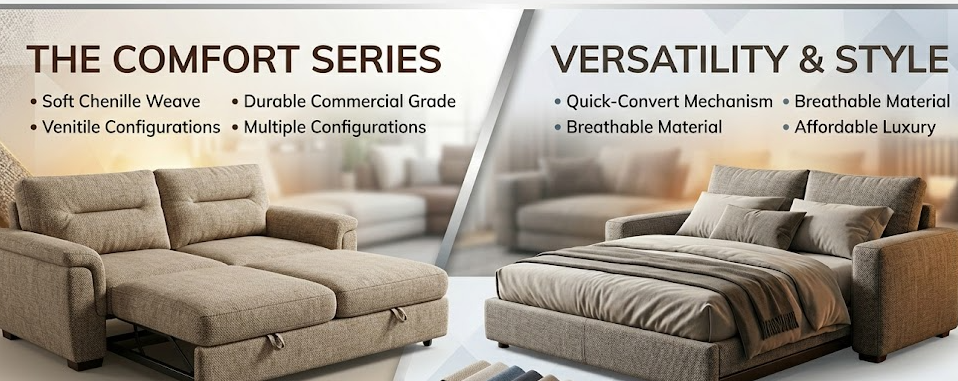
Here's what separates a real wholesale sofa bed supplier from a factory that just takes orders:
We don't push you toward what's easiest for us to produce. We help you think through what's right for your business. Sometimes that means telling a potential client "you should source elsewhere" because our product mix doesn't match their needs.
I remember turning down a large bulk sofa bed order because the client wanted cheap, ultra-lightweight designs. We could've done it. But we knew it would create problems within 6-8 months, and we'd rather maintain our reputation.
Our quality commitment:
Our partnership approach:
We provide quarterly market insights to our wholesale partners. We share data on what's selling, what's returning, what design trends are emerging. This isn't to push more sales—it's to help you make better decisions.
We also offer flexible production scheduling, which matters enormously for wholesale buyers managing cash flow. Need a rush order? We have capacity. Need to adjust next month's shipment? That's fine, we build that flexibility into partnerships.
Q: How do I know if I should stock leather or fabric?
Start with your customer data. If you already have sales history, analyze what's moving. If you're new, talk to your local market—what do similar retailers stock? What are customers asking for? Then start with a test order.
Q: Aren't leather sofa beds more profitable?
Higher price point, yes. Higher profit? Not necessarily. Once you factor in carrying costs, returns, warranty service, and time to sell, fabric often wins on actual profit per unit.
Q: Can I mix and match orders month to month?
Absolutely. A good wholesale sofa bed supplier will accommodate this. We adjust our production schedules based on client needs—that's part of what OEM/ODM capacity enables.
Q: What about customization?
This is where OEM/ODM really helps. Want specific colors? Custom dimensions? Modified mechanisms? We can usually accommodate it, especially if you're ordering in bulk.
Q: How do I handle storage?
Fabric sofa beds are more forgiving. Leather needs climate control—ideally 40-50% humidity, protected from direct sunlight. If your warehouse can't provide that, budget the cost or stick with fabric.
Q: What's the minimum order for wholesale pricing?
It varies, but typically we work with 10-20 units as a minimum to offer real wholesale pricing. Smaller orders are possible but at different margins.
After 20 years and countless wholesale relationships, here's what I believe:
The leather vs. fabric decision isn't really about the material. It's about understanding your market, managing your cash flow, and building sustainable inventory turns.
Too many wholesale buyers treat this like it's a fixed choice. "I'm going to be a leather sofa bed company" or "I'm going to be a value fabric sofa bed company." But the market is more nuanced than that.
The best wholesale buyers we work with think in systems:
They treat their wholesale sofa bed supplier relationship as a partnership, not a transaction. They share sales data with us, ask for honest advice, and adjust strategy based on what's actually happening in their market.
And you know what? Those clients thrive. They turn inventory 7-8 times per year, maintain healthy margins, and build loyal customer bases.
If you're sourcing wholesale sofa beds, take your time with this decision. Get samples. Test them in your market. Talk to actual customers about what they prefer.
Work with a wholesale sofa bed supplier that will be honest with you, even if it means recommending less inventory for them. That's what we do at Leizi.
We have strong products in both leather and fabric. We can serve whatever strategy you decide on. But we'll help you think it through first, because your success is actually our success.
Need to explore options? We provide detailed product catalogs for both our leather sofa bed wholesale and fabric sofa bed wholesale lines, with transparent pricing and realistic lead times.
Or if you're exploring bulk sofa bed purchasing, let's talk about your specific market and build a strategy together.
That's how real partnerships in this industry actually work.
Email cannot be empty
Password cannot be empty
Email format error
Email cannot be empty
Email already exists
6-20 characters(letters plus numbers only)
The password is inconsistent
Email format error
Email cannot be empty
Email does not exist
6-20 characters(letters plus numbers only)
The password is inconsistent