
Currency

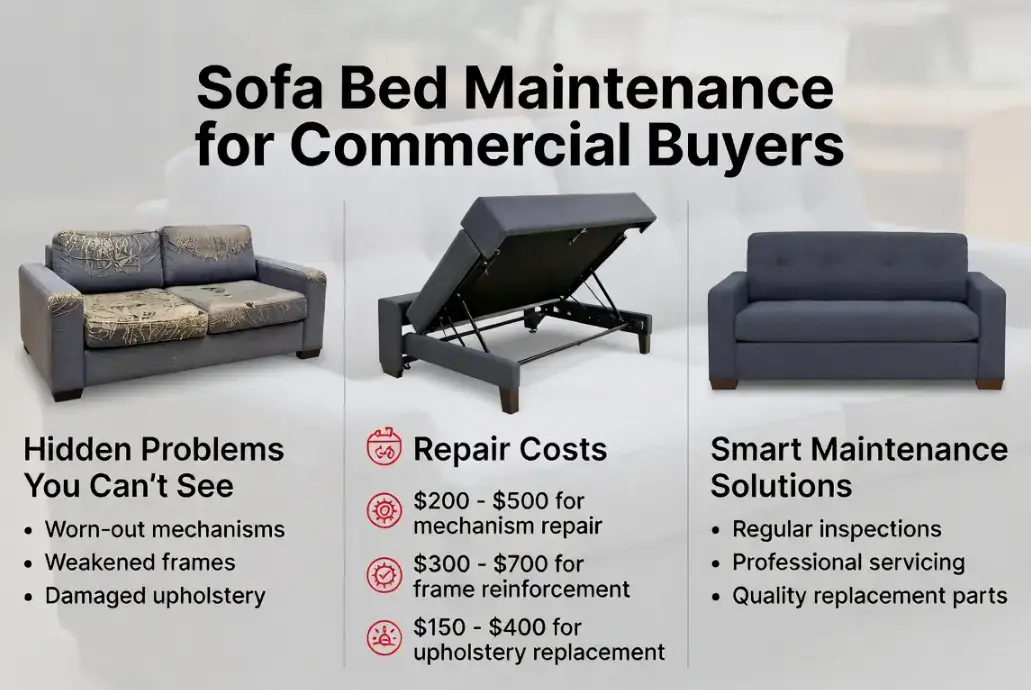
Most sofa bed maintenance guides focus on surface-level care — cleaning fabric, vacuuming cushions, or occasional checks. But for commercial buyers, these tips barely scratch the surface. In high-usage environments like hotels, serviced apartments, or rental properties, the real challenge isn’t just keeping a sofa bed clean — it’s managing durability, reducing repair frequency, and controlling long-term costs. From our experience at LEIZI, maintenance isn’t something that starts after purchase; it begins with choosing the right design, structure, and supplier.
Most maintenance guides you'll find online are written for residential users. They talk about "fluffing cushions weekly" and "avoiding sitting in the same spot." We've watched procurement managers try to apply these tips to hotels, hospitals, or rental properties. It never works.
Commercial environments operate differently. You can't control who uses your sofa beds or how often they get opened and closed. A hotel guest isn't going to vacuum the mechanism before checking out. We learned this the hard way during our early OEM days when we provided standard care instructions with our first bulk order. The client came back six months later with a 23% failure rate.
The real maintenance challenge for commercial buyers happens before you even receive the shipment. It's about selecting products that can survive neglect, not finding ways to baby furniture in a busy environment.
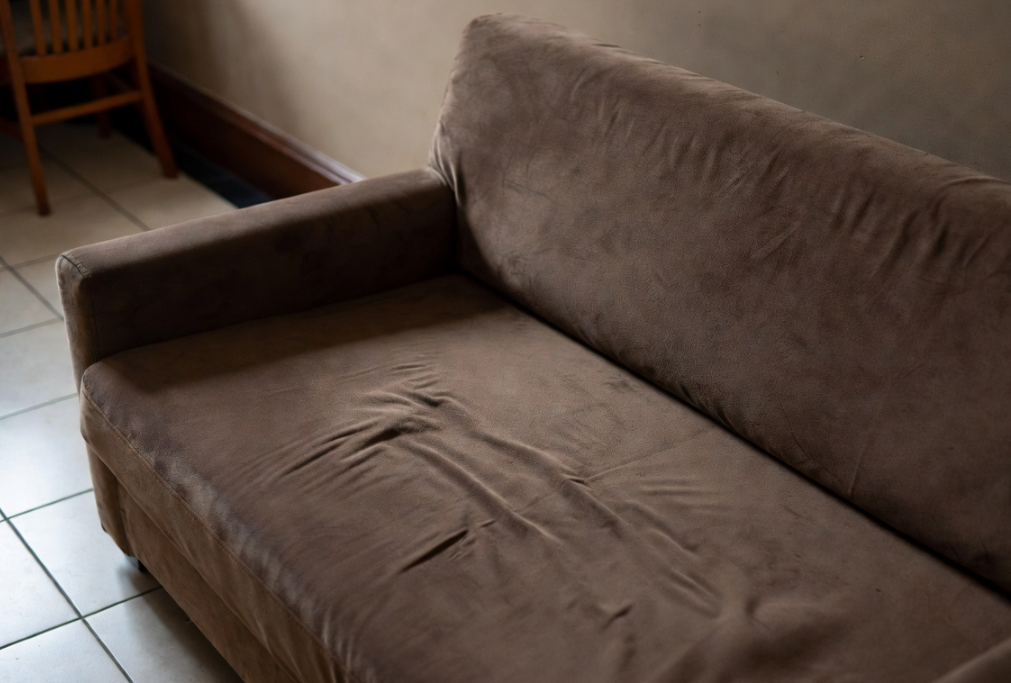
We recently helped a serviced apartment company calculate their actual sofa bed costs. The numbers shocked them. They'd bought cheaper units at $180 per piece, thinking they'd saved money. Here's what their three-year costs looked like:
Total: $38,700 for what they thought was an $18,000 investment.
Meanwhile, another client who'd purchased our mid-range commercial-grade units at $280 each spent $29,500 total over the same period—including just $1,500 in minor maintenance. The "expensive" option saved them $9,200.
These hidden costs multiply across your inventory. Every service call means staff time, every broken sofa bed means a room you can't sell or rent at full value.
After inspecting thousands of failed units, we've identified where commercial sofa beds actually break down:
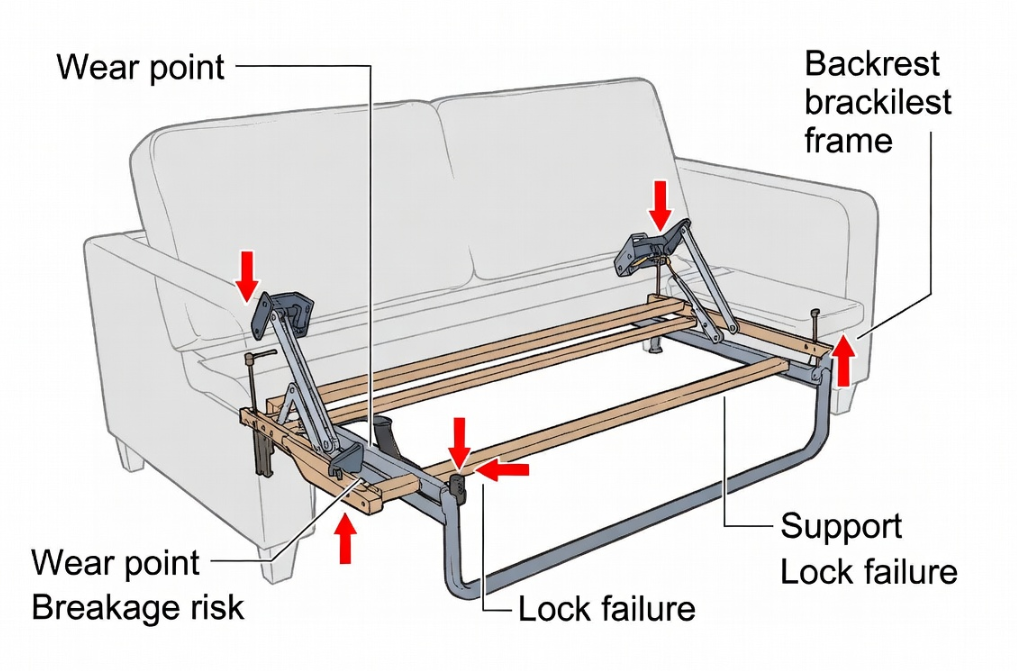
Frame stress points crack first. The folding mechanism junction bears enormous repetitive stress. We've measured this in our factory testing—cheap welding fails within 8-12 months under commercial use.
Springs lose tension unevenly. Poor-quality spring systems develop soft spots within six months. Guests always seem to find and sit on these exact spots, accelerating the damage.
Fabric tears at the fold line. This happens when manufacturers use residential-grade upholstery on commercial products. The constant friction during opening and closing creates weak points.
Locking mechanisms jam. Dust and debris accumulate in simple locking systems. We redesigned ours three times before finding a self-cleaning design that actually works long-term.
Mattress compression becomes permanent. Low-density foam might feel fine initially, but it loses 40-50% of its support within a year of commercial use.
Wooden slats split. This terrifies hotel managers because it creates liability issues. Solid wood slats crack; engineered alternatives often perform better.
Legs become unstable. Attachment points loosen from the constant weight shifts during conversion. We've seen units that looked fine but wobbled dangerously.
We tell our commercial clients to forget traditional maintenance schedules. Instead, build a system around these practical realities:
Create a 30-second inspection routine. Train your housekeeping or maintenance staff to check three things during regular cleaning: Does it open smoothly? Does it lock properly? Are there visible tears or wobbles? This takes almost no time but catches 80% of problems early.
Keep five spare units in storage. This seems counterintuitive, but it's cheaper than emergency orders. When a unit fails, you swap it immediately and repair at your convenience. One vacation rental company we work with reduced their per-repair cost by 60% using this approach.
Document everything with photos. Create a simple photo log when issues appear. We've helped clients get warranty coverage by providing this documentation, even when they thought they were past the warranty period.
Lubricate quarterly, not monthly. Over-maintenance wastes money too. The mechanisms in quality sofa beds need minimal intervention. We've tested this extensively—quarterly attention to pivot points prevents 95% of mechanical issues.
Vacuum the frame, not just the fabric. Debris under the sofa bed destroys mechanisms faster than heavy use. A quick vacuum of the underside every few months extends life dramatically.
Here's something we rarely see other suppliers discuss honestly: most maintenance problems are actually design problems.
We manufacture both economy and commercial-grade lines in our factory. The difference isn't just material quality—it's engineering philosophy. Economy designs assume careful use and regular maintenance. Commercial designs assume chaos and neglect.
When we design for bulk buyers, we ask different questions. What happens when someone sits on the armrest while the bed is extended? What if the mechanism doesn't get lubricated for two years? What if guests bounce on it?
Our commercial line uses sealed bearing systems instead of exposed pivots. We eliminated fabric fold-over points where tears typically start. The locking mechanism is literally twice as simple—fewer moving parts mean fewer failures.
This design thinking reduces your maintenance burden more than any care schedule ever could.
We've developed a selection framework specifically for commercial buyers:
Test the mechanism with one hand. If you can't open and close it smoothly with one hand, your guests and staff will struggle. Difficult mechanisms get forced, which causes damage.
Count the pivot points. More pivots mean more potential failure points. Our commercial designs use 40% fewer pivots than standard models while maintaining smooth operation.
Check the mattress separately. Pull it out and bend it. Low-quality foam rebounds slowly or stays compressed. Commercial-grade foam should snap back immediately.
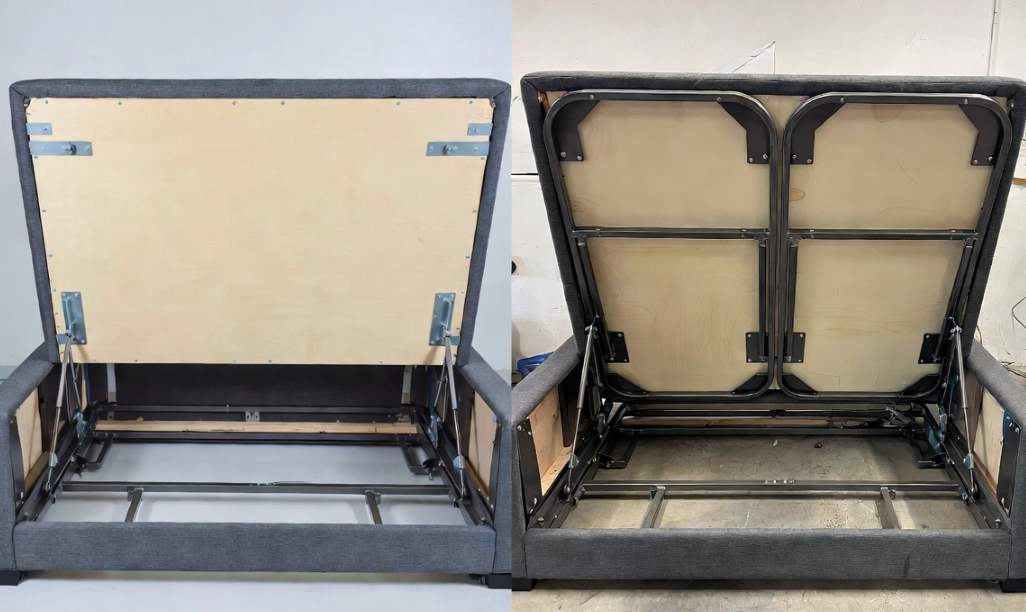
Look under the frame. Quality manufacturers finish the underside properly because they know you'll actually look there during maintenance. Exposed staples and rough edges indicate corners cut elsewhere too.
Ask about replacement parts availability. We stock parts for models we made eight years ago. Many suppliers discontinue parts within two years, forcing you to replace entire units for minor issues.
Request actual commercial references. Not just testimonials—actual contact information for buyers in your industry who've had the products for 2+ years.
This question costs buyers thousands in wrong decisions. We use this decision tree with our clients:
Repair if:
Replace when:
We maintain detailed failure rate data from our clients. When we see pattern failures emerging across a production batch, we proactively contact buyers. This happened last year with a locking mechanism component from a new supplier. We caught it before most clients experienced failures and handled replacements at our cost.
Our approach differs from typical manufacturers because we think about the total ownership cost, not just the sale price.
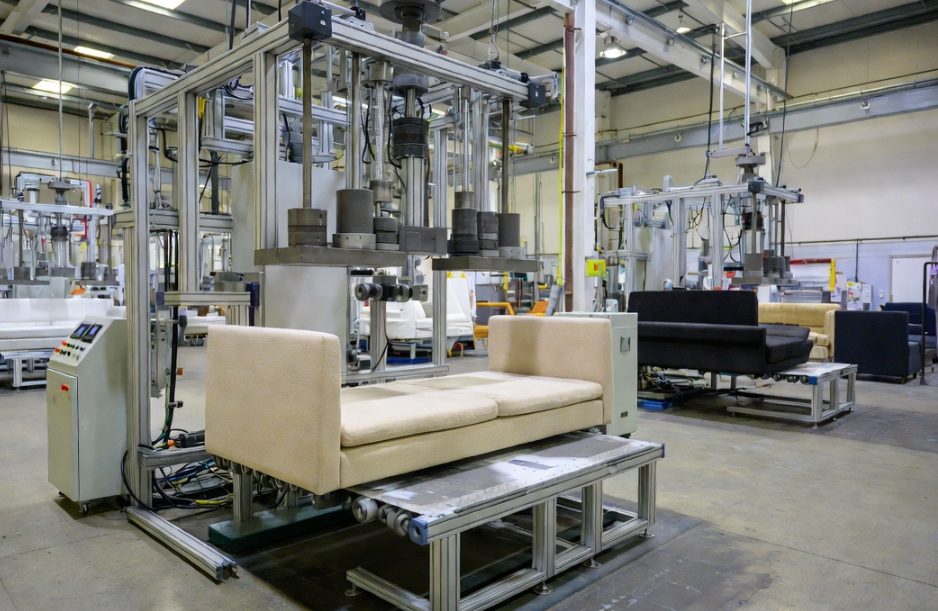
We design for durability testing. Every commercial model goes through 50,000 open-close cycles in our factory—equivalent to about 15 years of hotel use. We only release designs that pass without component replacement.
We provide realistic maintenance schedules. Our commercial buyers get a different care guide than our residential customers. It's based on actual field data from similar environments, not generic furniture care tips.
We stock deep inventory of parts. The hinge assembly that costs $12 in our warehouse costs $180 as an emergency order from most suppliers. We ship replacement parts within 48 hours at reasonable prices.
We offer design consultation before orders. Tell us your environment—hospital, hotel, rental apartment—and we'll recommend specific models based on what we've seen succeed in similar settings. Sometimes we talk buyers out of certain models because they're not right for the application.
Our ODM service builds in commercial features. When clients want custom designs, we incorporate our commercial-grade mechanisms and materials by default. We've seen too many custom orders fail because buyers didn't know which specifications mattered.
We track performance data and share it. Every quarter, we analyze failure reports from our commercial clients. This data shapes our next production runs. Our current designs have 67% fewer maintenance issues than our models from five years ago, entirely because we learned from real-world use.
The phone calls we get from frustrated buyers usually come 12-18 months after purchase. By then, they're managing problems instead of preventing them.
The real maintenance work happens during supplier selection. You're not buying sofa beds—you're buying a three-to-five-year relationship with furniture that needs to perform reliably without much attention.
We've built our reputation on understanding this difference. When you work with LEIZI, you're accessing twenty years of field failure data, engineering refinements based on real commercial use, and a manufacturing philosophy that prioritizes ownership cost over initial price.
The best-maintained sofa bed is one that rarely needs maintenance because it was properly designed and appropriately specified for your actual use case. Everything else is just damage control.
Email cannot be empty
Password cannot be empty
Email format error
Email cannot be empty
Email already exists
6-20 characters(letters plus numbers only)
The password is inconsistent
Email format error
Email cannot be empty
Email does not exist
6-20 characters(letters plus numbers only)
The password is inconsistent