
Currency

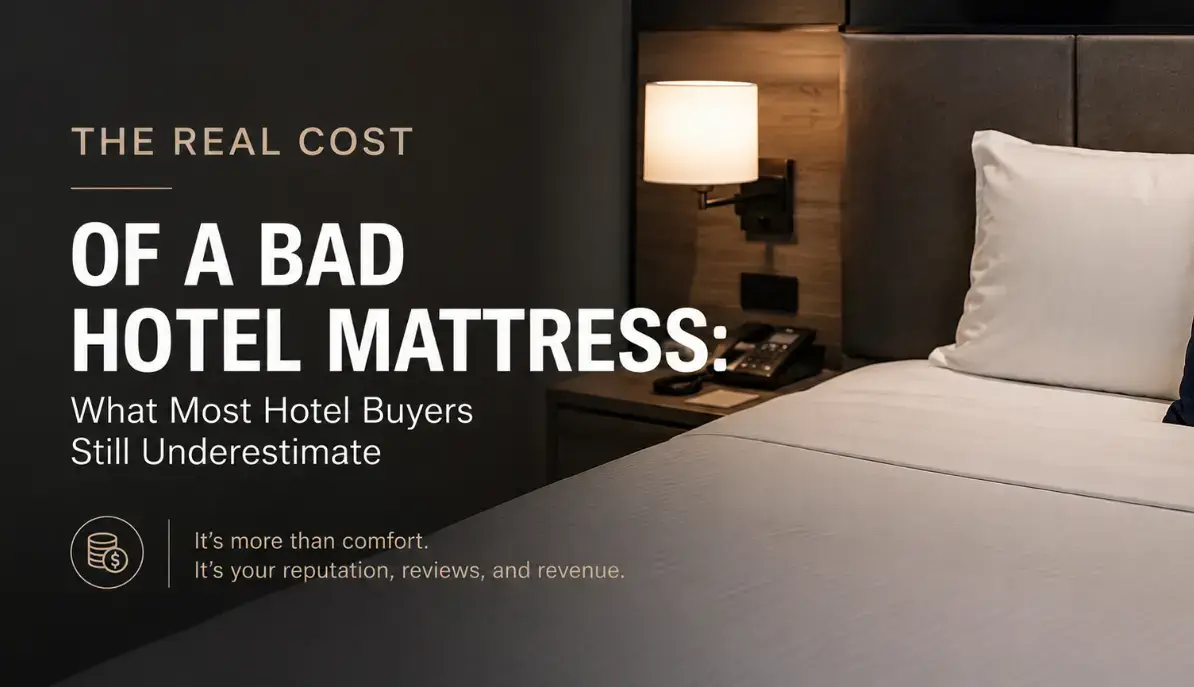
A hotel spends thousands on lobby renovations, upgrades the breakfast buffet, trains staff on five-star hospitality — and still gets hammered on review sites. The recurring complaint? "Couldn't sleep. Mattress was terrible."
Here's what most hotel buyers don't realize: guests will forgive a slow check-in. They'll overlook average coffee. But a bad night's sleep? That's unforgivable. And it's the one thing they'll mention by name in their one-star review.
At Leizi, we work with hotel groups across multiple markets, and we've noticed a pattern. The properties that maintain high occupancy rates aren't always the ones with the fanciest lobbies. They're the ones where guests wake up without back pain.
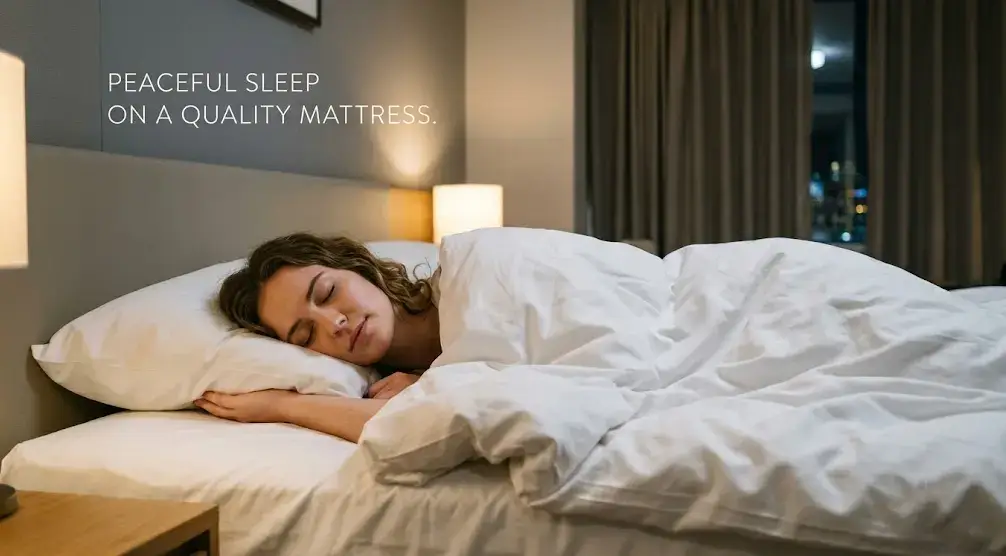
Most hotels treat mattress replacement like roof repair — something you do only when there's visible damage.
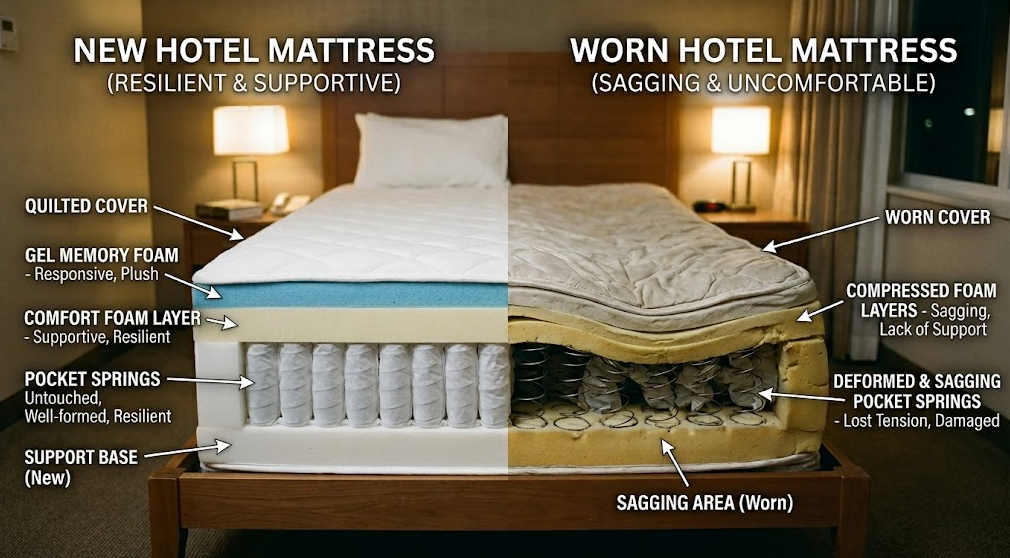
We had a client in Southeast Asia who proudly told us their mattresses had "lasted eight years." When we inspected them, the support cores had collapsed by over 30%. Guests weren't complaining loudly — they were just quietly booking competitors next time.
The problem isn't malice. It's invisibility. A mattress doesn't fail like a broken shower or a stained carpet. It degrades slowly, night after night, until what was once premium comfort becomes a liability you can't see but your guests absolutely feel.
Hotels often operate on reactive replacement schedules. Something breaks, you fix it. But mattresses don't "break" in the traditional sense. They betray you silently, one negative review at a time.
When we analyze complaint data from our hotel partners, we rarely see guests accurately describe what's wrong.
They'll say "too firm" when they actually mean "no pressure relief." They'll say "too soft" when the real issue is "poor edge support" or "motion transfer." We've tested mattresses that guests called "lumpy" that were actually just unevenly worn — the center collapsed while the edges stayed firm.
This is why you can't just swap a firm mattress for a soft one and call it solved. The real issues are usually structural:
We've worked with hotels who replaced mattresses based on guest feedback, only to get the same complaints again. Why? Because they diagnosed the symptom, not the cause. At our OEM facility, we don't just build mattresses to spec — we help hotels understand what "hotel-grade durability" actually means for their guest profile.
A quality hotel mattress from a manufacturer like us might cost $400-800 depending on specifications. Sounds expensive, especially when you're outfitting 200 rooms.
But consider what you're actually paying when you delay:
Lost bookings you'll never see in your P&L: When a guest books elsewhere next time, it doesn't show up as "mattress-related loss." It just looks like softening demand. We worked with a boutique hotel chain that tracked this. After upgrading mattresses in half their properties as a test, those locations saw 12% higher repeat booking rates over 18 months.
Discount spirals: Hotels with sleep complaints often compensate by lowering rates to maintain occupancy. You're literally discounting your way out of a comfort problem. One of our partners calculated they'd given away $15,000 in rate reductions and service recoveries over two years — enough to replace every mattress twice.
Review score depression: A single point drop in your online rating can cost you 10-15% of potential bookings, according to hospitality research. Sleep complaints drag scores down fast, and they're specific enough that potential guests really notice them.
We've never seen a hotel regret upgrading their mattresses too early. But we've seen plenty regret waiting too long.
Some hotel buyers look at retail mattress prices and wonder why they should pay more for commercial-grade products.
The difference isn't about comfort — it's about durability under conditions no home mattress ever faces.
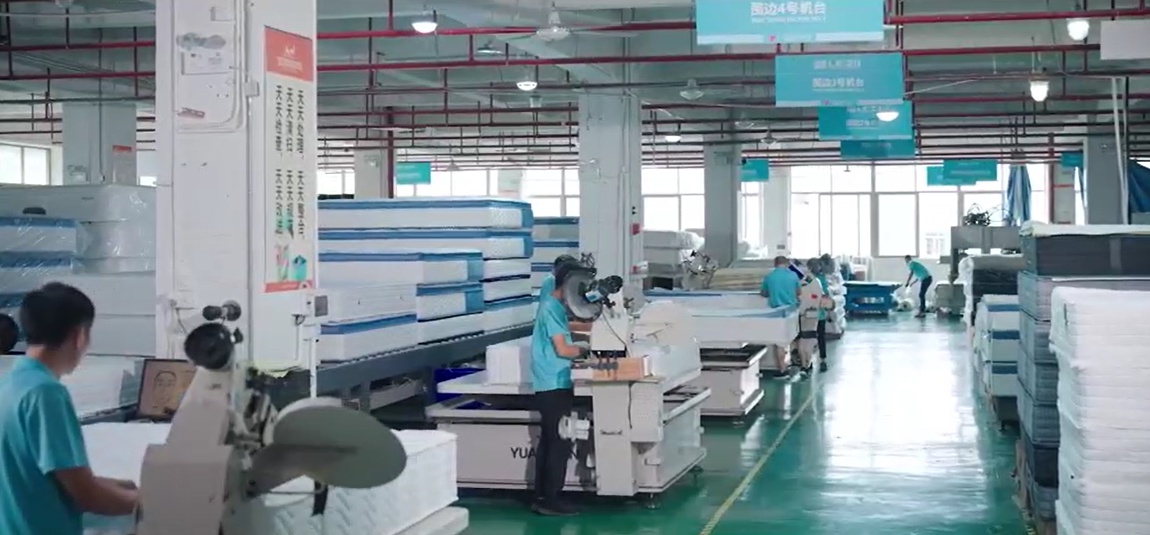
At our manufacturing facility, we build hotel mattresses to withstand different occupants every few nights, different body types, different sleep positions, extended periods without airing out, and commercial laundering of bedding that affects the sleep surface.
Consumer mattresses are designed for 10-15 years of use by the same 1-2 people. Hotel mattresses need to maintain consistency across thousands of sleep sessions in just 3-5 years. The engineering is completely different.
We use higher-density foams, reinforced edge systems, commercial-grade fabrics with antimicrobial treatments, and innerspring systems designed for variable loads. When we work with hotels on ODM projects, these aren't upsells — they're requirements for meeting performance expectations.
A home mattress in a hotel setting will fail in 18-24 months. We've tested this. The comfort layer compresses, the support core destabilizes, and you're replacing it twice as often while dealing with complaints the entire time.
Here's something that catches hotel buyers off-guard: getting rid of 100 old mattresses isn't free or simple.
Depending on your location, mattress disposal can run $20-50 per unit. Many cities have specific regulations about commercial mattress disposal. You can't just pile them by the dumpster.
We work with hotels in markets where environmental regulations are getting stricter. Some of our European partners now face mandatory recycling requirements that add both cost and logistics complexity.
At Leizi, we've started building disposal support into our large-order agreements. When you're replacing 200+ mattresses, we coordinate with recycling partners in your region or arrange collection as part of delivery. It sounds like a small thing, but we've seen hotels delay necessary upgrades simply because they didn't want to deal with disposal logistics.
Smart hotel operators now factor disposal into their total cost of ownership from day one. It's not just about buying the mattress — it's about the full lifecycle.
The traditional "8-10 year replacement cycle" works fine for low-occupancy properties or seasonal hotels. But if you're running 70%+ occupancy year-round? You're looking at 5-6 years maximum, and possibly less for suite beds that see heavier use.
We recommend hotels track these indicators rather than just calendar years:
Visible sagging or deformation — if you can see it, guests definitely feel it
Guest complaints — even one complaint per quarter per 100 rooms is a warning sign
Occupancy milestones — a mattress at 80% occupancy for 5 years has been slept on roughly 1,460 nights
Refresh cycles — if you're renovating rooms anyway, include mattresses even if they haven't hit the age threshold
We work with hotel chains who stagger replacement by room type. High-turnover standard rooms get refreshed more frequently than suites. Revenue-driving room categories get priority. This spreads the cost over multiple budget cycles while protecting your most important inventory.
The hotels that do this well don't wait for problems. They replace on a schedule that prevents complaints from ever happening.
The hospitality procurement landscape has changed dramatically in the past decade.
We've noticed a clear shift: larger hotel groups and even independent properties are increasingly bypassing distributors and working directly with manufacturers like us for mattress supply.
The reasons are practical. Customization matters more now. Different markets prefer different firmness levels. A hotel mattress that works in Northern Europe might get complaints in Southeast Asia. When you work with us on an ODM basis, we adjust density, height, materials, and comfort layers to match your actual guest preferences, not generic specifications.
Supply chain transparency has become critical. Hotels want to know exactly what's in their mattresses, where materials come from, and how products are tested. When you're three layers removed from the factory, you're relying on trust. Direct relationships mean you can visit our facility, see production, and understand quality control firsthand.
Cost efficiency improves at scale. Eliminating distributor margins means better pricing or better specifications at the same budget. For a 200-room property, the savings can be substantial enough to upgrade to a higher comfort tier.
We've built long-term partnerships with hotel groups precisely because we function as an extension of their operations team, not just a vendor. When properties expand or renovate, we already understand their standards, guest feedback history, and performance requirements.

The mattress conversation in hospitality isn't really about mattresses. It's about whether guests wake up ready to recommend your property or ready to write a review warning others away. It's about whether "great sleep" becomes part of your reputation or "uncomfortable beds" becomes your liability.
At Leizi, we're not trying to sell you the most expensive mattress. We're trying to help you understand what "quality sleep" actually costs — and what poor sleep is costing you right now in ways you might not be measuring.
If you're evaluating your current mattress situation, we'd encourage you to look beyond replacement cost. Calculate the value of improved reviews, reduced complaints, higher repeat rates, and stronger competitive positioning. That's where the real ROI lives.
Email cannot be empty
Password cannot be empty
Email format error
Email cannot be empty
Email already exists
6-20 characters(letters plus numbers only)
The password is inconsistent
Email format error
Email cannot be empty
Email does not exist
6-20 characters(letters plus numbers only)
The password is inconsistent